

The Production Part Approval Process (PPAP) is one of the key activities in the pre-launch phase. It also serves as the culmination activity for Advanced Quality Planning (APQP). To properly prepare for PPAP, we should remember a few basic rules.


50 Essential Automotive Terms and Abbreviations for Suppliers – Part IV
In the above article, we present the fourth part of the series related to English phrases and abbreviations for suppliers producing components for the automotive industry.

8D Report – Closing Audit
The last step in problem-solving using the 8D methodology is Step D8. This step refers to the recognition of the team's contribution. One of the activities associated with this step is the Closing Audit, which ensures the effectiveness of the analysis.

Core tools – key reference documents in Automotive
Core tools are recognized as a standard throughout the entire automotive industry. They are essential components of the Quality Management System (QMS), ensuring the production of conforming components delivered on time to customers.

Boosting Teamwork and Effective Problem Solving
Just like in team sports, solving problems without the right team and the necessary skills makes it impossible to complete the entire analysis process on time - or at best, extremely difficult.
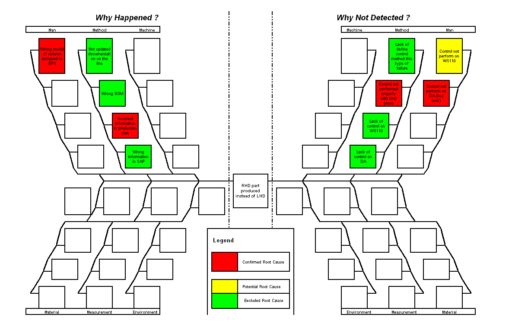
Double Ishikawa Diagram – More effective root cause definition
One of the problem solving steps is defining the root cause. An alternative to this phase of analysis is the double Ishikawa diagram, which is used for two scenarios: why the problem occurred and why it was not detected.
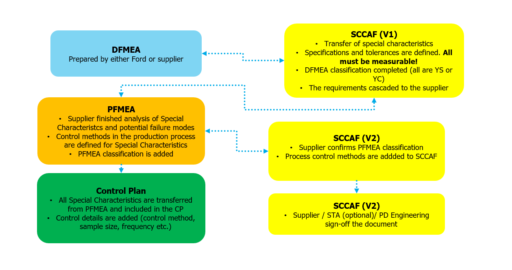
FORD SCCAF Explained: How to Manage Special Characteristics
FORD SCCAF is used in the process of selecting, identifying, and supervising Special Characteristics. It contains data from DFMEA and PFMEA and, thanks to the involvement of key functions (Ford PD, STA, supplier) early in the project lifecycle, helps reduce the risks associated with poor quality.

Customer Complaints: Are You making these mistakes?
One of the key indicators for a plant is the number of customer complaints. Additionally, some plants use an indicator based on PPM (parts per million). So, what mistakes should be avoided during complaints management? This is discussed in the article.

No Trouble Found – effective management strategies
No Trouble Found is the result of an analysis stating that the problem has not been confirmed. If the Pareto analysis shows that it's the main contributor to warranty returns, then the production plant should consider implementing strategies to reduce its occurrence.

Customer Representative Audit: How to prepare the Production Area?
During the pre-launch phase and current production, the customer representative reserves the right to perform a process audit. The production area is where most non-conformities are typically found; therefore, it should be properly prepared.