


The documentation may appear correct, while the actual process on the shop floor operates differently. Learn how to conduct a Go&See audit step by step, what questions to ask the operator, what evidence to look for, and how to distinguish facts from assumptions. If you want to assess processes more effectively where the work is actually performed, this article will help you structure your audit approach.

0 km Complaint – What to Do in the First 24 Hours
A 0 km complaint can turn the whole day upside down within minutes. The customer is waiting for a response, production is asking whether to stop the line, and logistics is checking shipments. See what to do in the first 24 hours to protect the customer, reduce the risk, and manage the problem properly.
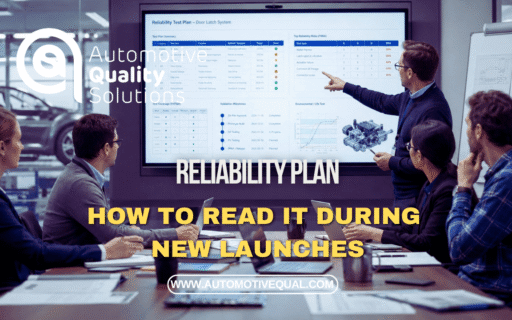
Reliability Plan – How to Read It During New Launches
At project meetings, the Reliability Plan is often discussed like just another item to close. In practice, it is a much more important document because it shows which problems may come back after the start of mass production and whether anyone tried to reduce that risk early enough.
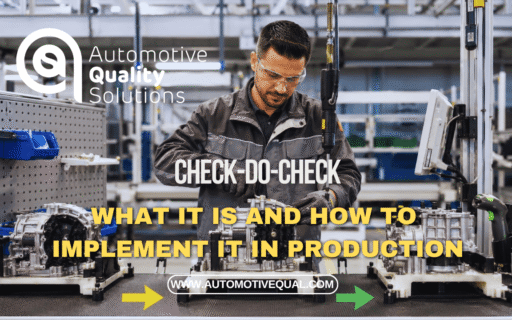
Check-Do-Check: What It Is and How to Implement It in Production
It sounds simple, but in practice, production quality often fails on exactly these simple standards. See what Check-Do-Check is, how it differs from final inspection, and how to implement it at the workstation so it works on the shop floor, not just in the instruction.
English for Automotive Quality Engineers – 50 Words and Phrases You Use in Everyday Work
If you know English but sometimes get lost in abbreviations used in projects, audits, or launches, start with this list.
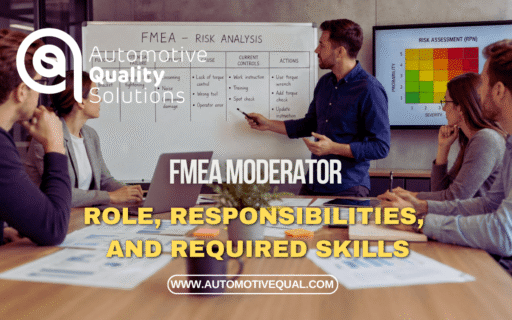
FMEA Moderator – Role, Responsibilities, and Required Skills
An FMEA moderator is not the person responsible for filling in the form. Their role is to guide the team through the risk analysis so that the discussion leads to practical actions, not just more entries in a table.

8D Report Template – What It Should Include and How to Complete It Properly
The phrase “8D report” usually does not come up when someone wants to read about the theory behind the method. Most of the time, it appears when there is already a problem on the table. That is exactly the moment when you need to respond to the issue, contain the process, and prepare a report that is more than just an empty document sent back for the sake of it.
Quality Requirements in Automotive – The Most Common Mistakes During Implementation
They may look clear on paper, but in practice, the biggest problems usually appear during implementation. A company updates documents, runs training sessions, closes actions in the system - and then an audit, a customer complaint, or a PPAP issue shows that the process is working differently than expected.
Quality KPIs in the Automotive Industry – Which Metrics to Track and How to Interpret Them Correctly
Quality KPIs are one of those topics that look simple in theory. In practice, however, the automotive industry quickly reveals whether those numbers reflect real process control or are just part of a report prepared for a meeting. A company can have a “nice” dashboard and still spend its time firefighting on the shop floor and explaining problems that should have been caught much earlier.

Part Submission Warrant (PSW) – 3 Common Mistakes and How to Avoid Them
Part Submission Warrant (PSW) works like the cover page of the entire PPAP package. It summarizes what you are submitting, why you are submitting it, and on what basis you can say: “we are ready for serial production.” By definition, it summarizes the PPAP documentation and is typically required for each part number, unless the customer specifies otherwise.

Fishbone Diagram – a Production Example: Scratches on a Plastic Part
Plastic processing is one of the most widely used manufacturing processes in industry. Even when the technology is refined to near perfection, one classic quality issue keeps coming back in practice: scratches on the part.

Quality Engineer – What They Do, Scope of Competencies, and How to Get Started
If you work in automotive, you know the vibe: everything looks normal in the morning, and by the afternoon you get an email with a complaint—and on the shop floor the quick counting starts: how many were produced, where they were shipped, and whether you can still stop it. That’s when the Quality Engineer steps in.